I realized that my LDAPS certificate is not trusted with the following command in PowerShell:
certutil -verify ldap.crt
I realized that my LDAPS certificate is not trusted with the following command in PowerShell:
certutil -verify ldap.crt
I configured Kerberos on Ubuntu 24.04 WSL and was able to run the following command:
export KRB5_TRACE=/dev/stderr
ldapsearch -H ldap://myserver.my.local -Y GSSAPI
that produced the following output:
(more…)C# code:
public void bindWithMs(string ldapServer, int ldapPort, string ldapUser, string ldapPassword)
{
    var ldap = new System.DirectoryServices.Protocols.LdapDirectoryIdentifier(ldapServer, ldapPort);

    using (var connection = new System.DirectoryServices.Protocols.LdapConnection(ldap))
    {
        connection.AuthType = System.DirectoryServices.Protocols.AuthType.Negotiate;
        connection.Timeout = TimeSpan.FromSeconds(120);

        connection.SessionOptions.ProtocolVersion = 3;
        connection.SessionOptions.Signing = true;
        connection.SessionOptions.Sealing = true;

        connection.Credential = new System.Net.NetworkCredential(ldapUser, ldapPassword);
        connection.Bind();
    }
}
Extract the archive:
tar xf /mnt/c/Users/dmitriano/Downloads/apache-jmeter-5.6.3.tgz
Install Java runtime:
sudo apt install default-jre
java --version
openjdk 21.0.8 2025-07-15
OpenJDK Runtime Environment (build 21.0.8+9-Ubuntu-0ubuntu124.04.1)
OpenJDK 64-Bit Server VM (build 21.0.8+9-Ubuntu-0ubuntu124.04.1, mixed mode, sharing)
On the domain controller:
nslookup -q=SRV _kerberos._tcp.other.local
Server:  localhost
Address:  127.0.0.1

_kerberos._tcp.other.local      SRV service location:
          priority       = 0
          weight         = 100
          port           = 88
          svr hostname   = 7-dev-de-dc16.other.local
7-dev-de-dc16.other.local       internet address = 10.15.7.16
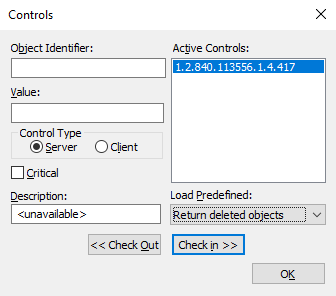
A tombstone is a container object consisting of the deleted objects from AD. These objects have not been physically removed from the database. When an AD object, such as a user is deleted, the object technically remains in the directory for a given period of time; known as the Tombstone Lifetime.
Go to Options -> Controls